
Learn by deciding
Your students invest, get it wrong, and understand why. Every decision has a consequence they see on the next turn.
✓A teaching approach the OECD recommends ✓Skills from the PISA framework
From high school → to higher education
A freeFree license for secondary schools, anywhere in the world. Higher education institutions purchase a license. simulation for the classroom. Your students analyze, decide, and figure out for themselves how the economy and financial markets work.
Nothing to install, no accountsIn class, at home, or both

Your students invest, get it wrong, and understand why. Every decision has a consequence they see on the next turn.
No student accounts, no email addresses, no sign-up. Students join with a simple class code. Classroom use is compatible with privacy laws such as GDPR, FERPA, and COPPA.
Secondary schools
Free license
Higher education
From €990 per institution
The Teacher Portal
Two minutes, and the class is playing: one code on the board, nothing to install.
Set the pace: live in class, remotely, or one turn a day.
See at a glance who's playing and who's dropping off, without chasing anyone.
Know what to revisit in class: the concepts that stuck and the ones that didn't.
A debrief that writes itself: what the class got right, what it missed.
Stars for each concept, based on students' decisions: a ready-made assessment, nothing to grade.
Three Ways to Use It
The code on the board, the whole class joins together.
Decisions at home, the debate in class.
Each student moves at their own pace.
The program
A level runs 12 turns, covers one year in the life of an investor, and fits in a single class period. Every level wraps up cleanly, with no story left hanging, so you can pick the track that matches the time you have, the concepts you need to cover, and the class in front of you.

What does it mean to invest?
Risk and return, diversification, judging how reliable information is, thematic funds, opportunity cost.

What makes a price move?
Regional funds (US, Europe, Asia), stocks, market risk, interest rates and asset prices, macroeconomic indicators.

What is the difference between an asset's return and its price?
Government and corporate bonds, coupons, risk premium, cash-flow income versus price change, following a chain of cause and effect.

What happens after a crash?
Illiquid long-term investments (real estate and private equity), systemic crisis, volatility.

Why do interest rates move asset prices?
Monetary policy, interest rates and bond prices, how it flows through to the real economy, thinking critically about rumors, signal versus noise.
Teaching through decisions
No lectures, no quizzes. Students work through the situations first, and the teacher then builds the lesson on what they just experienced. This is the approach the OECD recommendsSource: OECD, Recommendation of the Council on Financial Literacy, 2020: favor programs where learners experience what they learn, and serious games for learning by doing in a safe environment. Read the official text for financial education, and the skills students practice are those of the PISA financial literacy frameworkSource: OECD, PISA 2018 Assessment and Analytical Framework, financial literacy framework: money and transactions, planning and managing finances, risk and reward, financial landscape. Read the framework.
Leading research in financial education (Kaiser, Lusardi, Menkhoff) shows that active learning and simulations beat lectures, especially when the decision comes before the explanation. Capital Valley is built on that principle: every turn is a decision, and every decision has a consequence you can see on screen.
Nothing in the game is left to chance. Two students who make the same decisions get the same results, which makes a rigorous debrief possible: you're comparing strategies, not luck.
In the classroom
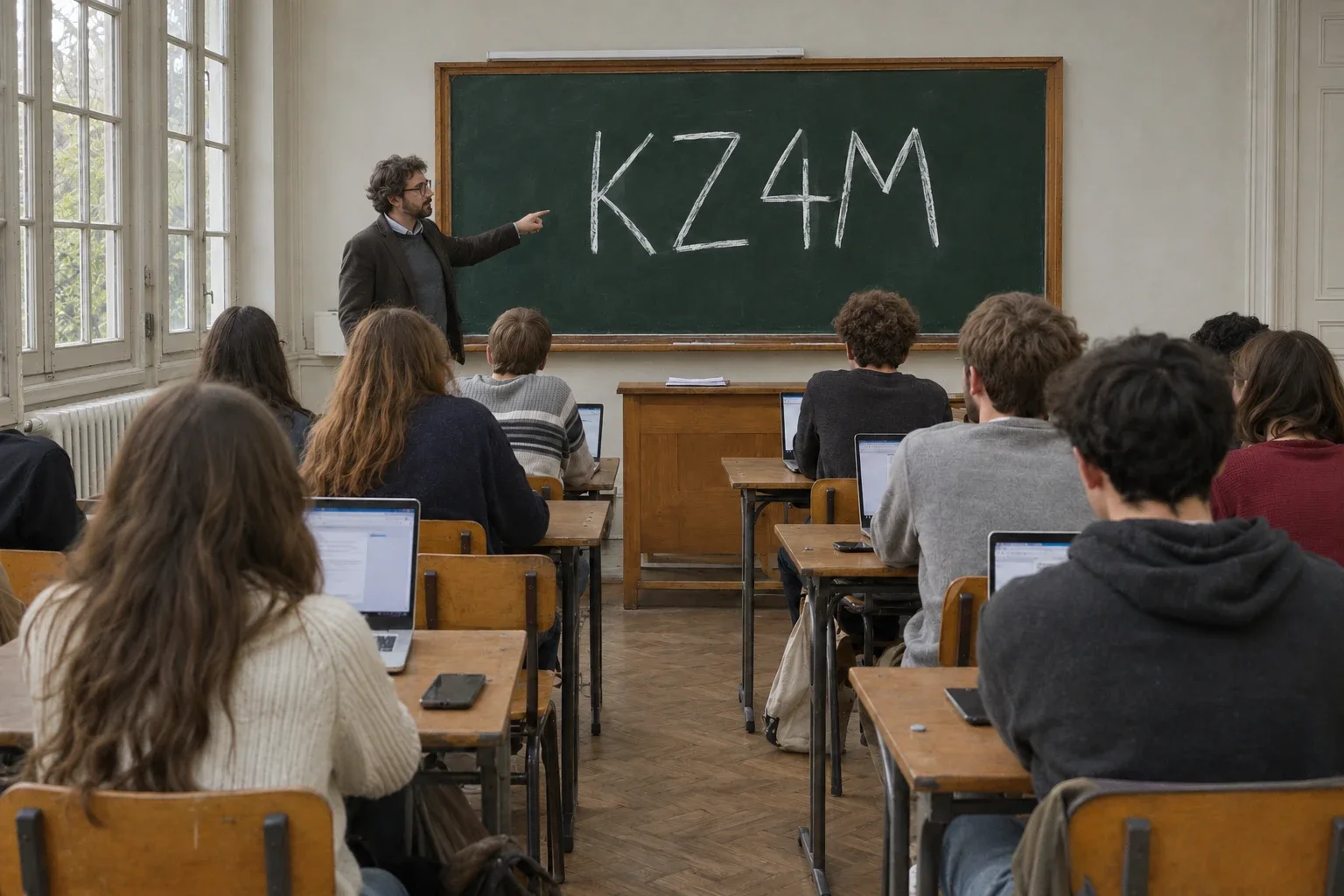
The code goes on the board; students join from a computer or a phone.
No, none at all. A class code is all it takes. Students enter the code on the board and their first name, and they're in.
Only a first name (which can be changed, and a nickname is fine) and the decisions they make in the game. No email address, no last name, no contact information.
Yes. Capital Valley is a plain web page served over HTTPS, with nothing to install and no trackers. It works on Chromebooks, tablets, phones, and desktop computers: in the computer lab or on a smartphone, the teacher decides.
Level 1 from Grade 10 (US) / Year 11 (UK), the first two levels from Grade 11, the first three from Grade 12. Levels 4 and 5 (crisis, liquidity, monetary policy) are written for higher education: colleges, business and engineering schools, universities. Nothing stops a motivated Grade 12 class from going further.
One level, meaning 12 turns and about 30 minutes of play, fits in a 55-minute class period with the debrief. The complete track, five levels, takes five class periods, or students can play it on their own at home with their student code.
A level fits in a 55-minute class period: about 30 minutes of simulation, with the rest for the debrief. Students don't have to move at the same pace: each one plays their own turns.
Yes. Each student picks their game back up with their student code, on any computer or smartphone. The "1 turn a day" setting is built for this: a new turn opens each morning, to be played during the day.
They jump back in at the turn the class has reached. Missed turns count as played with no changes: their portfolio stays put, and they can see what they missed.
The track is chosen when the game is created. You can always end the game early from your Teacher Portal, at the end of a level: every level closes with a review, never with a story left hanging.
You don't have to: the lesson plans give you all the guidance you need. That said, a 30-minute solo game of level 1 will show you exactly what your students will experience: try the game.
The license is free for secondary schools, with no limits and no hidden premium tier. Higher education institutions purchase a license: pricing is public.
Mainly through licenses purchased by higher education institutions (technical and community colleges, bachelor's programs, business and engineering schools...): those pay for the free licenses in secondary schools. Sponsorships fill in the rest, with zero say over the teaching content. No student data is collected, and none is shared with anyone.
Yes, with an institutional license (technical and community colleges, bachelor's programs, business and engineering schools...): the license pricing is public, with a founder price for the first year.
Applications in progress. Capital Valley is part of the international movement for economic and financial education. Registration for Global Money Week activities and listing in catalogs of teaching resources are in progress. Free license for secondary schools, with no student data collected; licenses for higher education.
Have a question, need a license for higher education, or planning a tournament? education@capitalvalley.app